
An international workshop to explore design approaches for promoting future-oriented, sustainable developments and possibilities and to use them in a constructive, empowering and transformative sense.
Revolutionizing Governance and Management: Empowering Creative Design in a Future-Ready World
21.03.2023


Credit: unibz/Eurac Research

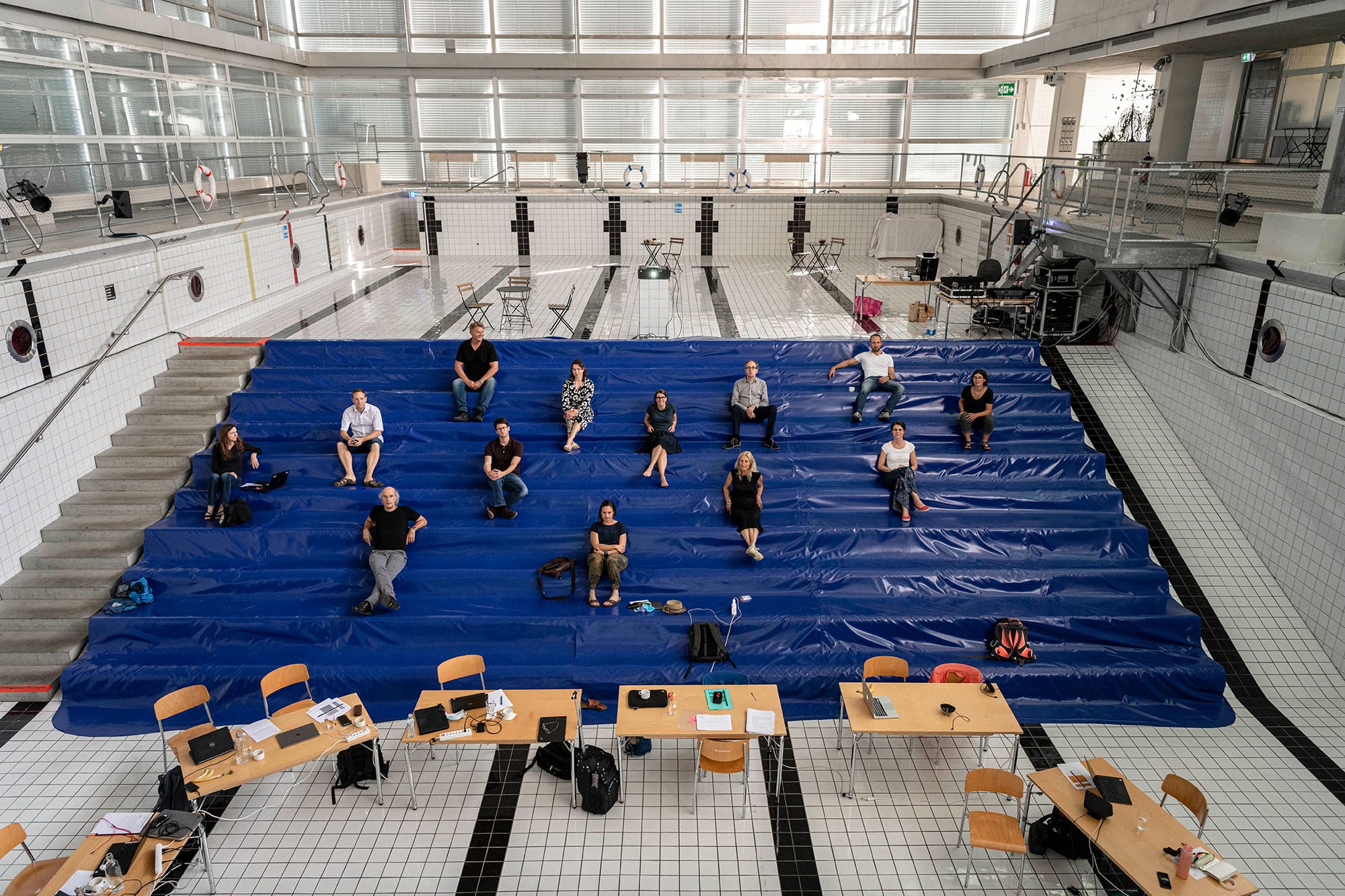
Left to right in the picture: Harald Pechlaner, Sabine Junginger, Andreas Metzner-Szigeth, Roberto Verganti, Alexander Mankowsky, Philippe Vandenbroeck, Jennifer Schubert, Joe Ravetz, Ingrid Kofler, Greta Erschbamer and Sonia Matos
Credit: unibz/Eurac Research
Roberta Bottarin giving the opening remarks
Credit: unibz/Eurac Research
The welcoming address by Günther Mathà
Credit: unibz/Eurac Research
Joe Ravetz, Ingrid Kofler and Sabine Junginger
Credit: unibz/Eurac Research
Marc Röggla, Harald Pechlaner and Roland Benedikter
Credit: unibz/Eurac Research
Jennifer Schubert, Sonia Matos and Philippe Vandenbroeck
Credit: unibz/Eurac Research
Alexander Mankowsky, Greta Erschbamer and Roberto Verganti
Credit: unibz/Eurac ResearchHow to improve problem-solving and decision-making procedures?
In the welcoming address, Roberta Bottarin (Vice-Director of Eurac Research) and Günther Mathà (Managing Director of unibz) opened the conference by emphasizing the practical importance of design in scientific research and developing effective problem-solving procedures in socio-economic contexts. The need to prioritize intrinsic motivation in any collaborative work and all kinds of organizations was highlighted, and the importance of interdisciplinary approaches illustrated.
In his general introduction, Andreas Metzner-Szigeth (Professor in Sociology of Culture and Communication at unibz) framed the three main topics of the workshop - design, governance, and management – as different forms of professional practice which could benefit from one another since they are complementary. He discussed four essential qualities to consider when solving problems in the framework of sustainable development: social cohesion, ecological integrity, economic performance, and liberal self-determination. Drawing attention to the interdependence of different transformation techniques, he underscored the crucial notion that "we either succeed together as a team, or we fail."
The need for human centred design in public administration
In her keynote, Sabine Junginger (University of Applied Sciences, Luzern) focused on using design approaches in government today and in the future. During her presentation, she emphasized the potential of design approaches in driving future-oriented governance and management practices while contributing to the development of sustainable public services that nurture trust in government, social cohesion, and social justice. She delved into the challenges faced by governments when implementing digital transformation, particularly in light of an aging workforce and the imperative to achieve more with limited resources. Furthermore, she underscored the transformative power of human-centered design in reshaping future public services. By prioritizing the needs of individuals, reimagining services, transforming organizational structures, and informing policies, human-centered design has the capacity to revolutionize public services for the better.
Joe Ravetz from the University of Manchester took the stage to explore the captivating realm of visual imagineering during his presentation. He introduced three key concepts: visual imagineering, multiple knowledge, and collective intelligence. Ravetz shed light on how individuals engage in serious games to comprehend and address global challenges, including climate change. Ravetz also introduced "The New Pretzel Theory", which pertains to seemingly daunting problems that appear difficult or nearly impossible to solve. Ravetz emphasized the potential for collaborative efforts to discover viable pathways known as climate-wise pathways, where people work together to uncover potential solutions. He highlighted the co-evolution process as a series of steps that progressively improve and ultimately lead to dream-like functional pathways.
Graphic recording - Day 1

Andreas Metzner-Szigeth: On Sustainable Futures, Generative Competences, and the Nexus of Governance, Management and Design
Credit: unibz/Eurac Research | Delilah Angel Friedman
Sabine Junginger: Design in Government: Basics, Current Practices, and Future Outlook
Credit: unibz/Eurac Research | Delilah Angel Friedman
Joe Ravetz: Visual Imagineering: Graphic Mind-games for Exploring the 'Collective Climatic Intelligence'
Credit: unibz/Eurac Research | Delilah Angel Friedman
Ingrid Kofler: Social Participation and Transformation within Real-World Laboratories
Credit: unibz/Eurac Research | Delilah Angel Friedman
Marc Röggla: Power-Sharing: An Institutional Design for Deeply Divided Societies
Credit: unibz/Eurac Research | Delilah Angel Friedman
Roland Benedikter: Designing Futures Literacy
Credit: Eurac Research/unibz | Delilah Angel FriedmanShared power and power-sharing in the context of South Tyrol
Marc Röggla (Head of the Center for Autonomy Experience, Eurac Research) discussed power-sharing as an institutional design for deeply divided societies. He highlighted the importance of discussing power dynamics in majority-minority conflicts and the increasing diversity of societies. He also distinguished between shared power and power-sharing and explained consociationalism as a form of power-sharing, which can be divided into a liberal and cooperative approach. In the context of South Tyrol, Röggla explained how power-sharing is based on a proportional system, including executive proportionality, public service proportionality, and public funding proportionality. Referring to the participatory processes of citizens, he finishes his presentation with the vital question: How can we transform frustration into positive energy through design?
The connection between design and leadership was addressed by Harald Pechlaner (Head of the Center for Advanced Studies, Eurac Research) in his talk about "Design Strategy versus Strategy Design: Perspectives of Leadership". He mentioned the need for holistic approaches to solving problems of increasing complexity. Pechlaner argued that design thinking provides new ways of understanding complexity and is crucial in fostering resilient and sustainable transformation in complex situations. He connected design thinking to leadership and management and provided valuable insights into how design thinking can be used to develop effective leadership strategies.
In his presentation, Philippe Vandenbroeck (International Futures Forum, London) focused on how humans can develop even more complex solutions to overcome complexity. Vandenbroeck argued that the ability to absorb complexity must be as wide as the environment itself. He used the metaphor of the "nest" to emphasize the interconnectedness of everything in the world. Vandenbroeck emphasized that humans create worlds, and worlds create humans, therefore, the role of design in this process is essential.
It's all about purposeful and responsible design
Roberto Verganti (Stockholm School of Economics) opened the discussion on how design is changing in the face of systematic changes and how it can support the new demand for leadership. Verganti argued that design should be purpose-driven and focus on designing for our better selves. He emphasized the importance of taking responsibility for one's work and highlighted how design can make sense of things and improve an optimistic approach of co-creating.
Alexander Mankowsky's (Mercedes-Benz AG, Berlin) presentation, "Making Use of 'Ideation' - for Addressing Multiple Crises, and for the Elaboration of Entrepreneurial Strategies" focused on how ideation can address multiple crises and develop entrepreneurial strategies. Mankowsky argued that in a poly-crisis, the consequences of the dynamics of the whole are more impactful and worse than those released by the sum of its parts. He proposed different approaches to get through these troubled times and emphasized the importance of collaboration and innovation.
How can design perspectives in destination research lead to a fresh understanding of problems and the elaboration of innovative and participatory solutions was the question posed by Greta Erschbamer (Economist at the Center for Advanced Studies, Eurac Research) in her speech "Design Approaches to Develop Touristic Destinations". She highlighted that traditional methods and instruments of destination management and governance are under scrutiny and need to be reviewed due to changing political, social and technological circumstances. Erschbamer argued that a transdisciplinary approach that combines destination concepts with design research could expand traditional perspectives on tourism destinations.
Overall, the conference “Fit for the Future with Design” provided valuable insights into how design thinking can be used to foster transformation in complex situations. The conference provided a platform for sharing knowledge and experiences and facilitated the development of new ideas and collaborations. The importance of creative and interdisciplinary approaches in addressing complex challenges and creating a more sustainable and equitable future was elaborated and discussed. The speakers offered unique perspectives on design's role in sustainability, leadership and interdisciplinary research, encouraging further discussion and exploration among participants.
Graphic recording - Day 2

Harald Pechlaner: Design Strategy versus Strategy Design: Perspectives of Leadership
Credit: unibz/Eurac Research | Delilah Angel Friedman
Sonia Matos: Lessons from the Field: Brief Notes on Design, Eco-Social Transformation, and Interdisciplinary Research
Credit: unibz/Eurac Research | Delilah Angel Friedman
Philippe Vandenbroeck: Embracing the Ontological Turn: Moving from Design to 'Nesting'
Credit: unibz/Eurac Research | Delilah Angel Friedman
Roberto Verganti: We Design for Our Better Selves. How Design Is Changing in the Face of Systemic Changes, and Why It Can Support the New Demand for Leadership
Credit: unibz/Eurac Research | Delilah Angel Friedman
Jennifer Schubert: Experimental Participation Strategies for Enriching Formalized Policy Structures
Credit: unibz/Eurac Research | Delilah Angel Friedman
Greta Erschbamer: Design Approaches to Develop Touristic Destinations
Credit: unibz/Eurac Research | Delilah Angel Friedman
Alexander Mankowsky: Making Use of “Ideation” - for Addressing Multiple Crises, and for Elaboration Entrepreneurial Strategies
Credit: unibz/Eurac Research | Delilah Angel FriedmanDieser Inhalt wird von einem externen Anbieter bereitgestellt. Durch die Anzeige des externen Inhalts akzeptieren Sie die Bedingungen und Konditionen.
Interview with Sabine Junginger: Design dares to ask dumb questions
Sabine Junginger, Professor of Design and Management at the Lucerne University of Applied Sciences and Arts, discusses design in public administration, why it's essential to ask stupid questions, and her "abnormal" CV. She recently spoke at the workshop "Fit for the Future with Design" hosted by the Center for Advanced Studies of Eurac Research and the Faculty of Design and Arts of the Free University of Bolzano.
INTERVIEW IN EN | INTERVIEW IN DE
Interview with Andreas Metzner-Szigeth: Fit for the Future with Design

Wie können öffentliche Verwaltungen und Unternehmen von kreativen Ansätzen profitieren und damit unsere Zukunft besser gestalten? Darüber spricht Andreas Metzner-Szigeth im Interview mit unibz.
INTERVIEW IN DE








 Meine Cookie Einstellungen