


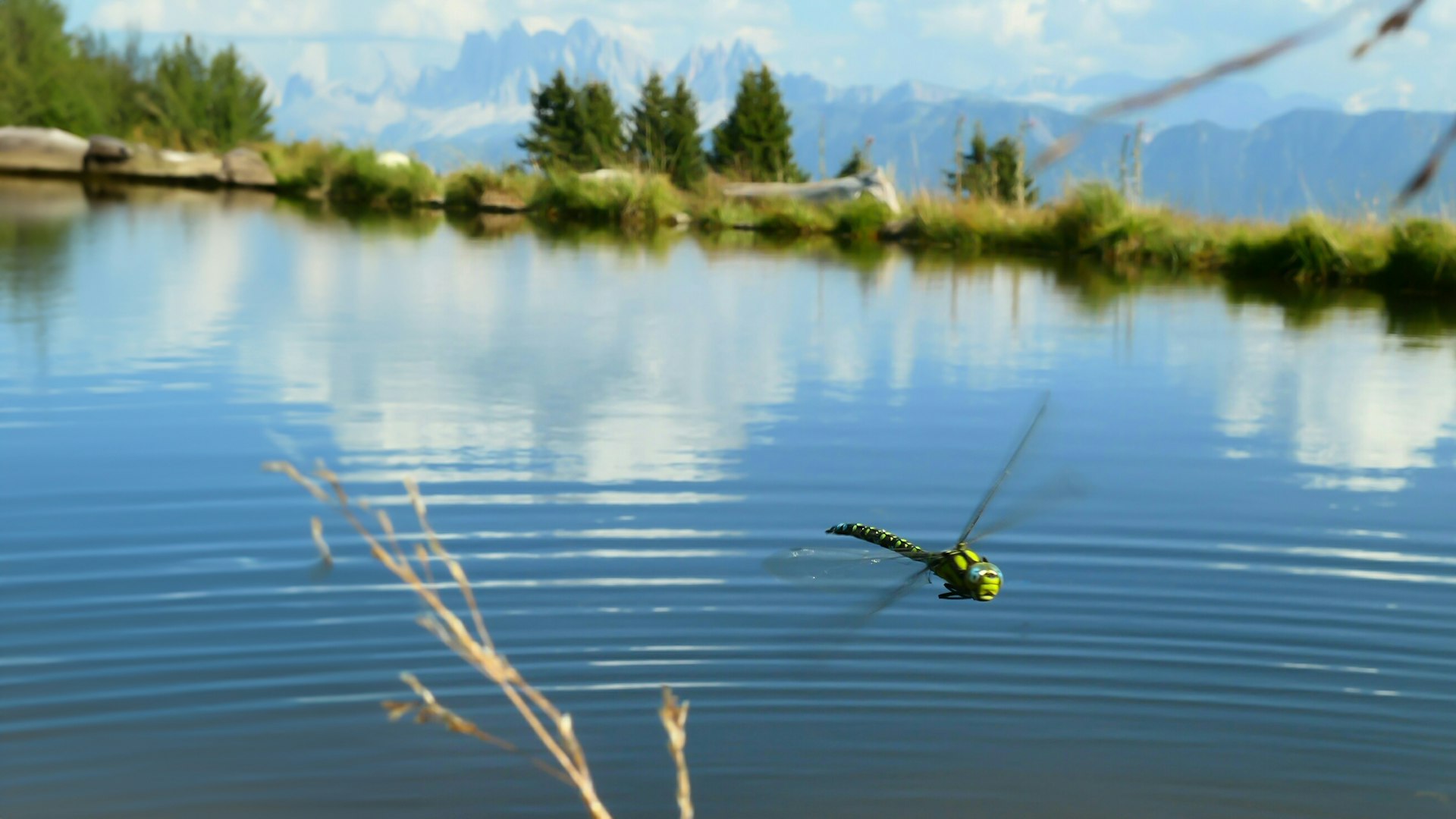
Flying jewels, vulnerable specialists
For the first time, South Tyrol’s dragonfly fauna has been studied across the entire region and at all altitudes – with important findings for species protection in times of climate change.
In July two years ago, young biologist Felix Puff was surveying dragonflies at the Caldaro/Kaltern lake and he couldn’t believe his eyes. A purple specimen? Impossible, not here. Puff managed to take a photo from a few meters away. It seemed, just seemed, that the dragonfly in the picture could be the violet dropwing. The species is native to Africa but has been moving northward for decades as part of a large wave of expansion caused by global warming, which has made African dragonflies native to Spain and Italy and Mediterranean dragonflies native to Germany. The sun-loving dragonfly reached the Po Valley in 2017 and is now widespread there. In South Tyrol, however, it had never been sighted before 2023.
August brought certainty: hundreds of bright purple dragonflies were buzzing around the same Lake. The following year, they had disappeared – “perhaps the larvae didn't survive the winter,” says Puff. “But, it’s only a matter of time before the lake is warm enough to support a year-round population. Then you’ll find this dragonfly from the Congo to Caldaro/Kaltern.” The African newcomers may well become a threat to native species – but these luminous beauties are wonderful to behold.
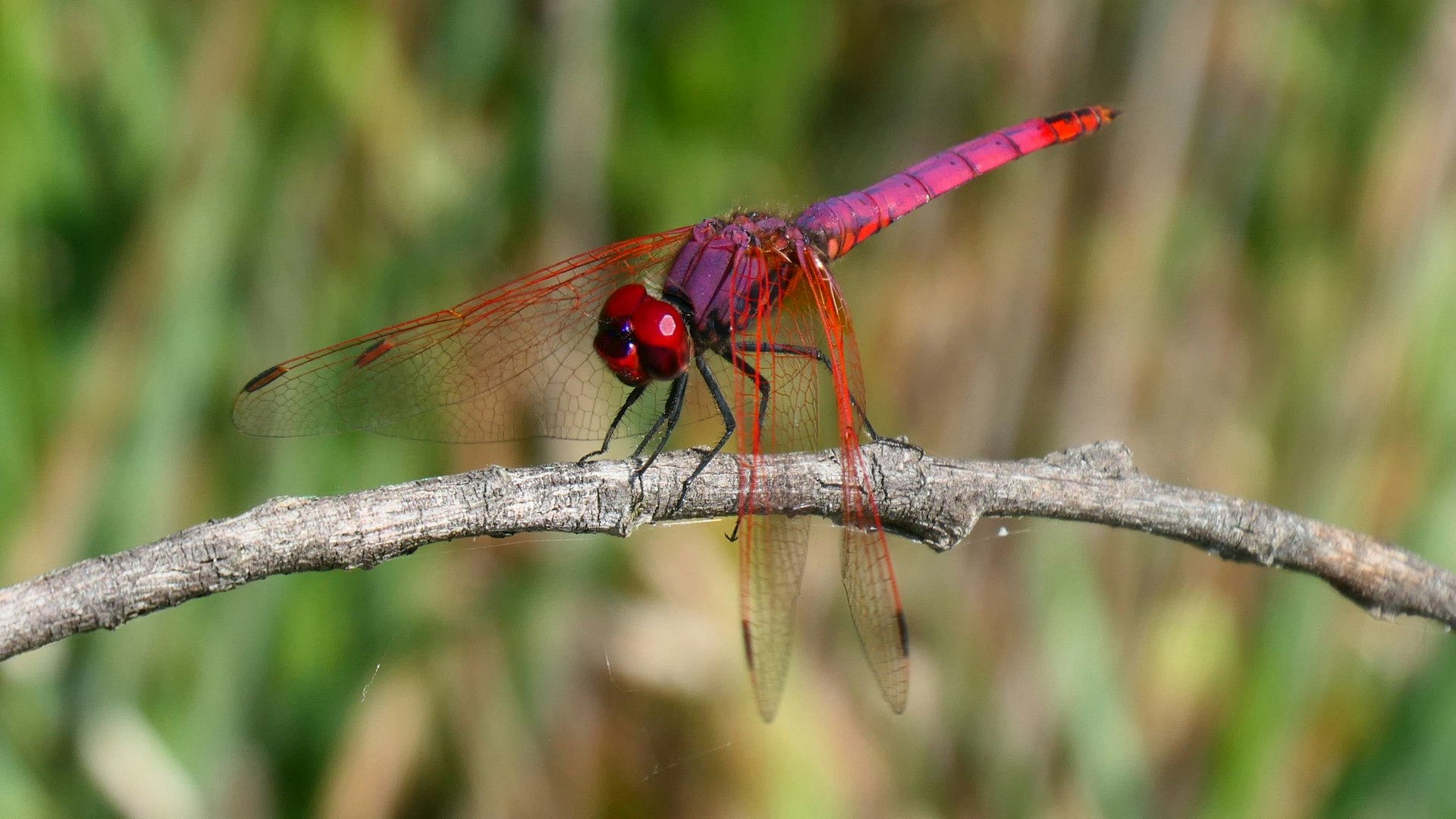
The violet dropwing – an African species, is benefiting from climate change and has been spreading northward for decades.

The blue tailed damselfly has no particular requirements and is therefore very common. This one was photographed in the Eurac Research pond, one of the 13 artificial bodies of water in the study.
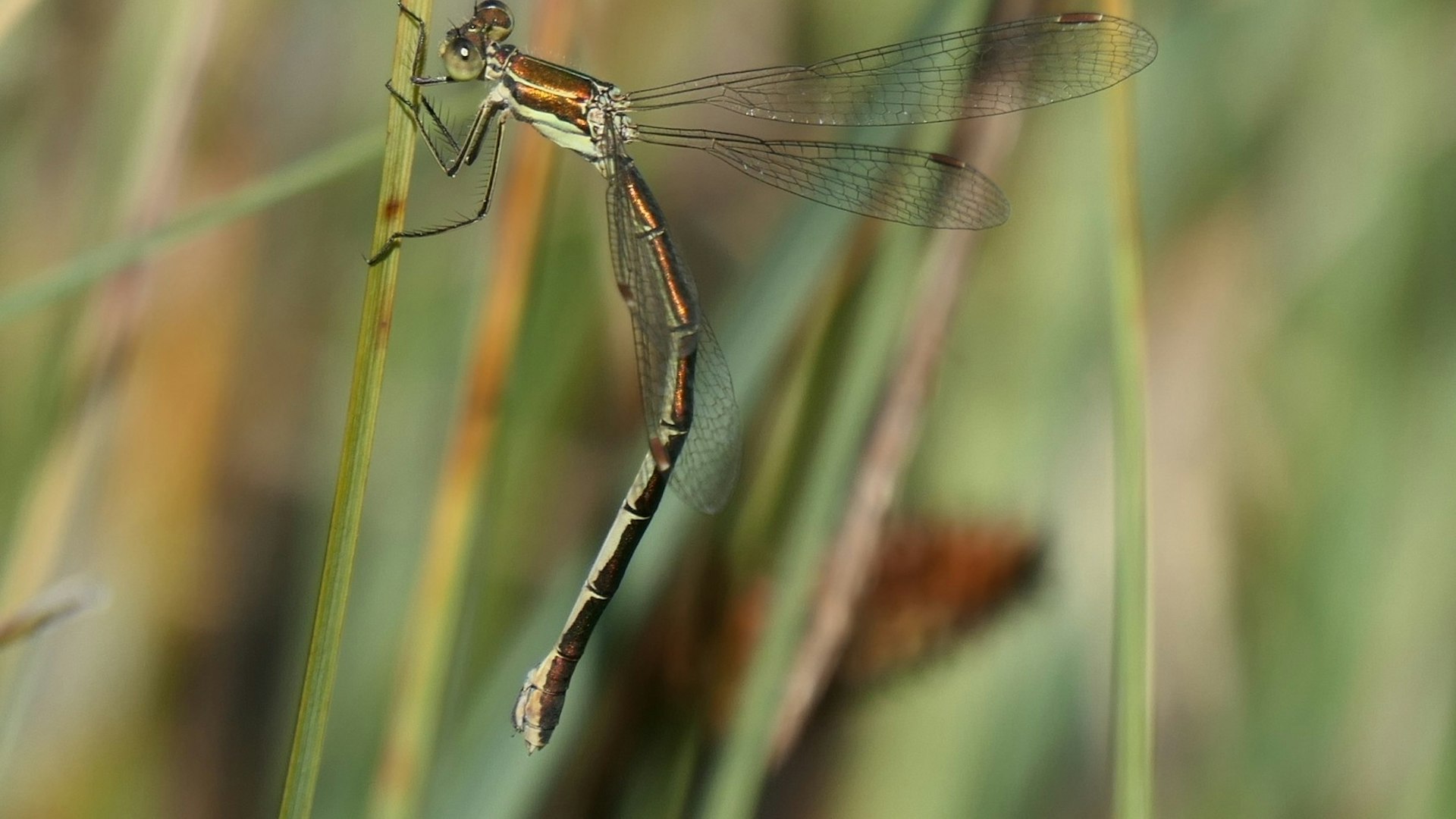
The small spreadwing was considered extinct in South Tyrol – then Felix Puff discovered this single female on the Vigil Joch monte san Vigilio in 2023.
Even those who know little about dragonflies find them fascinating. They shimmer like jewels in the sunlight, are masterful flyers that can reach speeds of up to 50 kilometers per hour, can break abruptly, and even maneuver backwards, beating their four wings independently of each other. Thanks to their acrobatic flying skills, they are elegant hunters – they eat only meat, preying on mosquitoes, flies, and butterflies, but also their smaller relatives. Their ancestors were even buzzing through the air in the time of the dinosaurs, with wingspans up to 70 centimeters. “Before nature observation became scientific, dragonflies embodied water spirits for humans,” says Puff. “The connection to mythology can still be seen in the German names of the species: Jungfern means Greek water nymphs in German.”
Airborne ancestors as old as dinosaurs


Einst häufige Arten sind rar geworden – aber es gab auch ein Comeback.

Once widespread, today the beautiful demoiselle lives in only two lakes in South Tyrol. The image shows the “mating wheel” between male and female
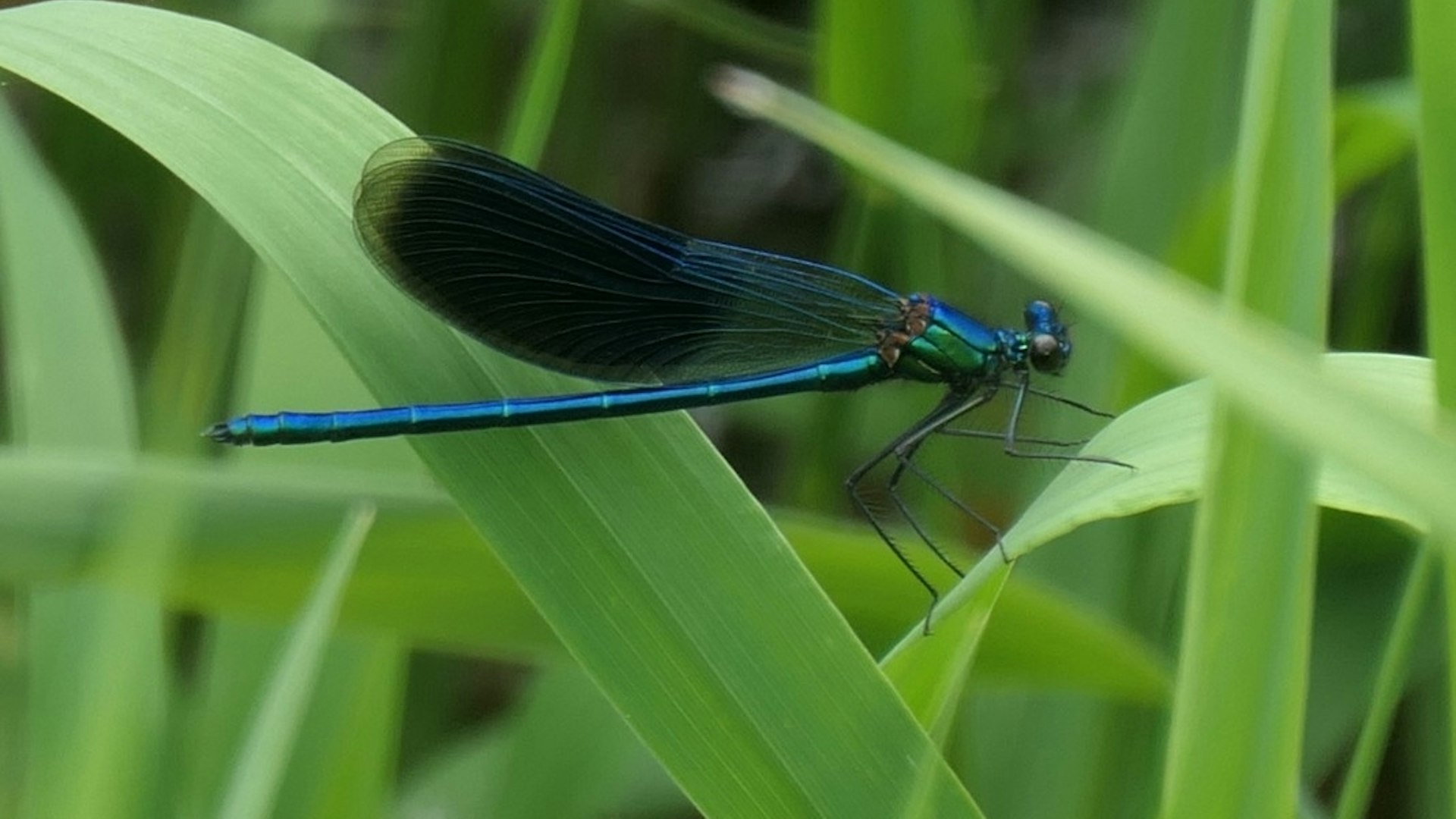
The banded demoiselle was once very rare, but it has returned. Today, it is again widespread along the irrigation ditches of the Adige Valley.
Even before Puff began studying dragonflies scientifically, they were his “hobby.” In addition to their aesthetics, “there is no dragonfly that is not beautiful”, he likes their strong attachment to a habitat: “Even if a lake and a bog are close together, they are home to completely different dragonfly communities. The animals can fly ten kilometers, but they remain loyal to the habitat their larvae need. It’s almost like sea turtles – they cross oceans but always return to the same beach to lay their eggs.”
During his studies, Puff did an internship at Biodiversity Monitoring South Tyrol (BMS), which gave rise to the idea of a standardized survey of dragonfly communities throughout the province, which he implemented in collaboration with BMS and under the supervision of Christian Schulze, professor at the University of Vienna.
The study sites range in altitude from 215 to 2,450 meters and include 28 natural and 13 artificial water bodies. Puff recorded the species and their frequency of occurrence in the field and combined the results with the characteristics of each species, providing a detailed picture of how habitat conditions and functional characteristics are related.
In large dragonflies, for example, their colors become darker and their body sizes increase with increasing altitude: both being adaptations to colder conditions which permit the insects to absorb more light and store more heat. Small dragonflies, on the other hand, do not exhibit such adaptations, which is why they are less common in colder, alpine habitats. These results confirm observations made in studies conducted on a continental scale – in cold regions of the world, dragonflies are darker in order to absorb heat better, while in warm regions they are lighter in order to prevent overheating. At the same time, this is the first study to demonstrate these trends at the local level along an alpine altitude gradient.








 My cookie preferences