
magazineGraphic Article
Fighting over water
Graphic article – How the water resource of a river is used and what conflicts may arise among those who benefit from it.
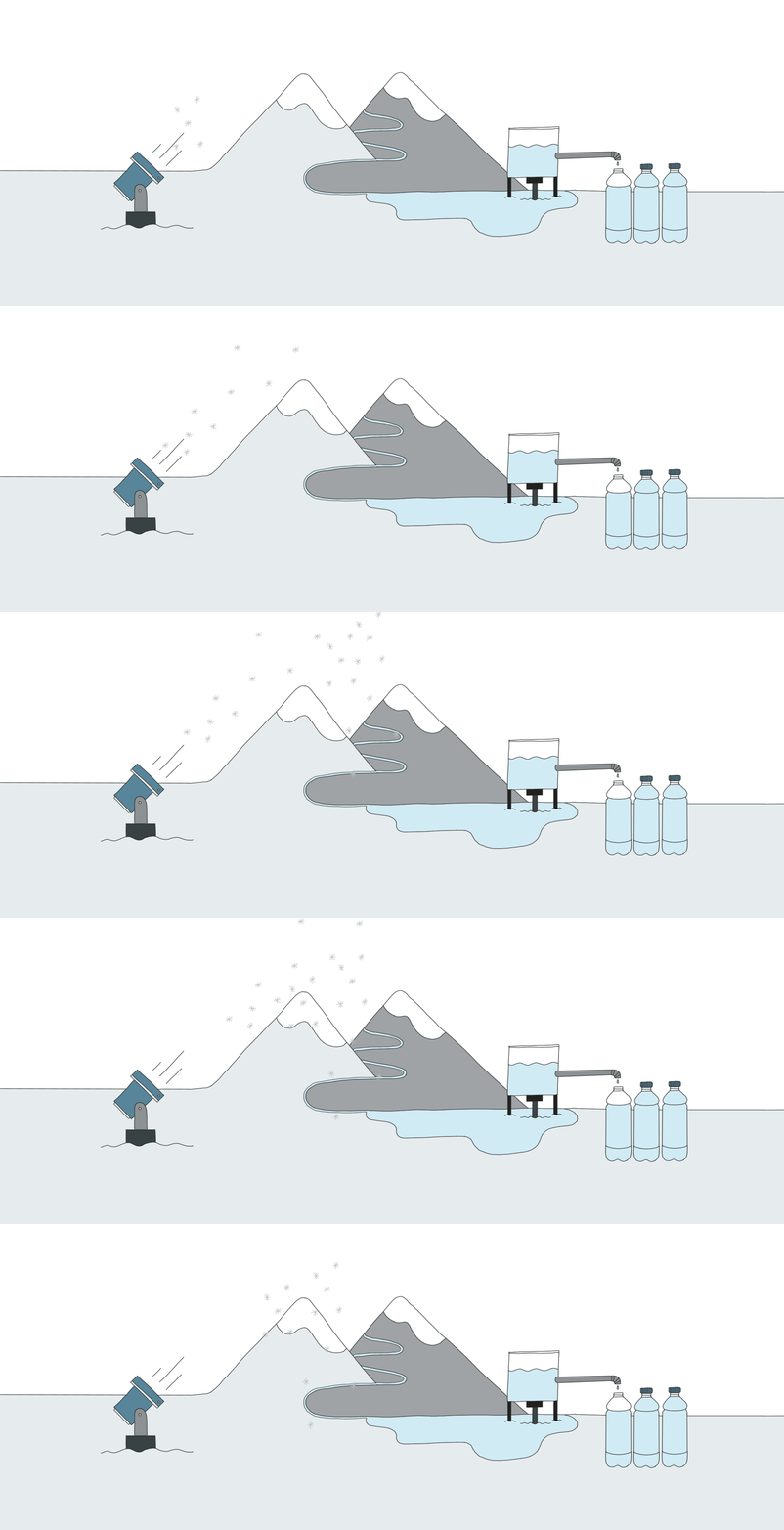
The source and the first stretch of the river
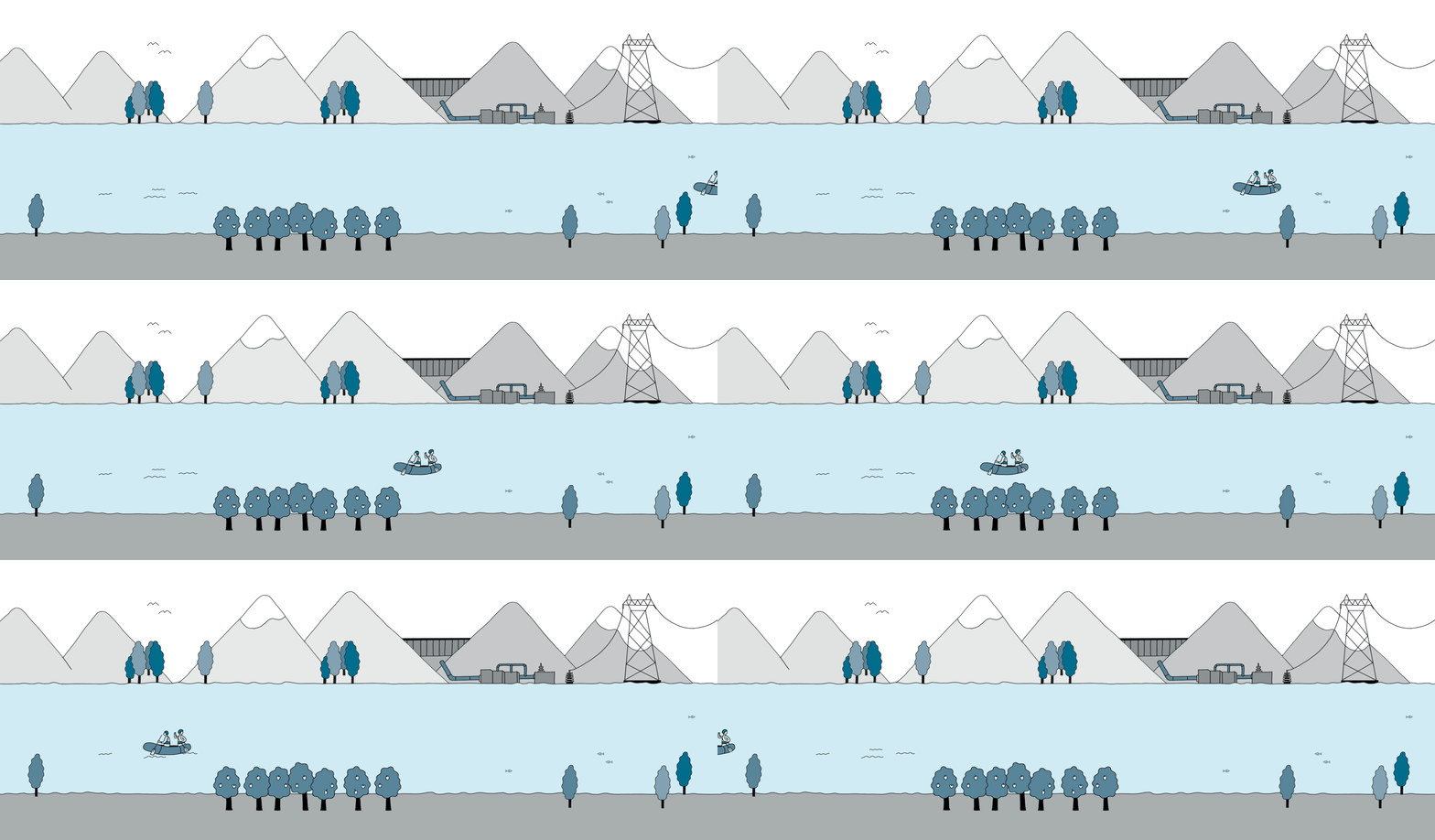
The upper course of the river
A potential conflict: upstream of hydroelectric plants
A conflict arises when an agricultural business takes water directly from an artificial lake that is also used for hydroelectric power generation. During drought conditions, the water level in the lake is low, and farmers require more water for irrigation. However, extracting the water becomes more costly, as it needs to be pumped from the lower levels of the reservoir. Shared management plans mediate the needs of the farmers with those of the hydroelectric plant for energy production.
A potential conflict: downstream of hydroelectric plants
Mountain agriculture and the hydroelectric sector operate on different schedules that do not always align, which can lead to small, localized conflicts that only emerge during certain periods or at specific times of the day.
The hydroelectric plant follows the logic of the energy market: when there is a higher demand for electricity and prices rise (such as in the morning), the plants begin to operate. The water flowing through the turbines is immediately released downstream of the facility. But is this really the time when this water is also needed by the nearby agricultural businesses? Not always.
The use of irrigation methods that consume little water helps keep potential conflicts very localized.
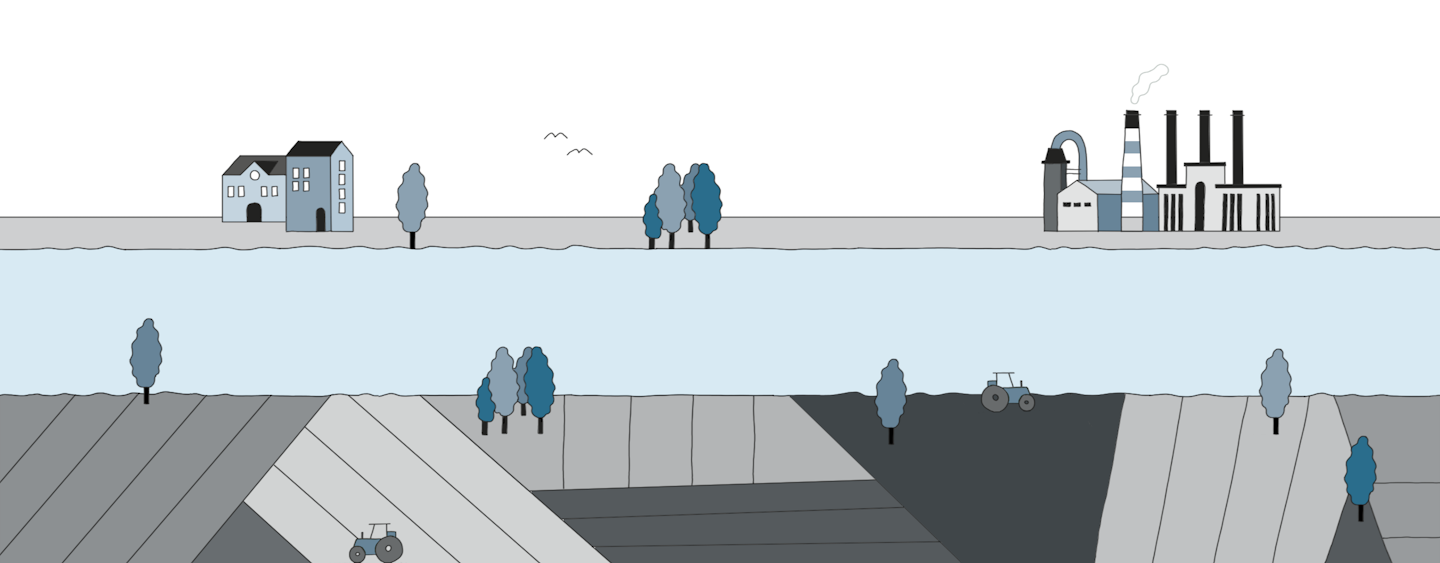
The lower course of the river
A possible conflict: hydroelectric plants upstream and extensive agriculture in the plain
Hydroelectric plants upstream and extensive agriculture downstream are among the users that can often come into conflict due to their high levels of water consumption, especially during periods of prolonged drought. In these situations, associations representing agriculture downstream may request a higher water release from artificial lakes. On the other hand, upstream users may criticize the inefficiency with which water is used. Cross-regional forums and drought observatories aim to find shared solutions for addressing both immediate and long-term challenges.
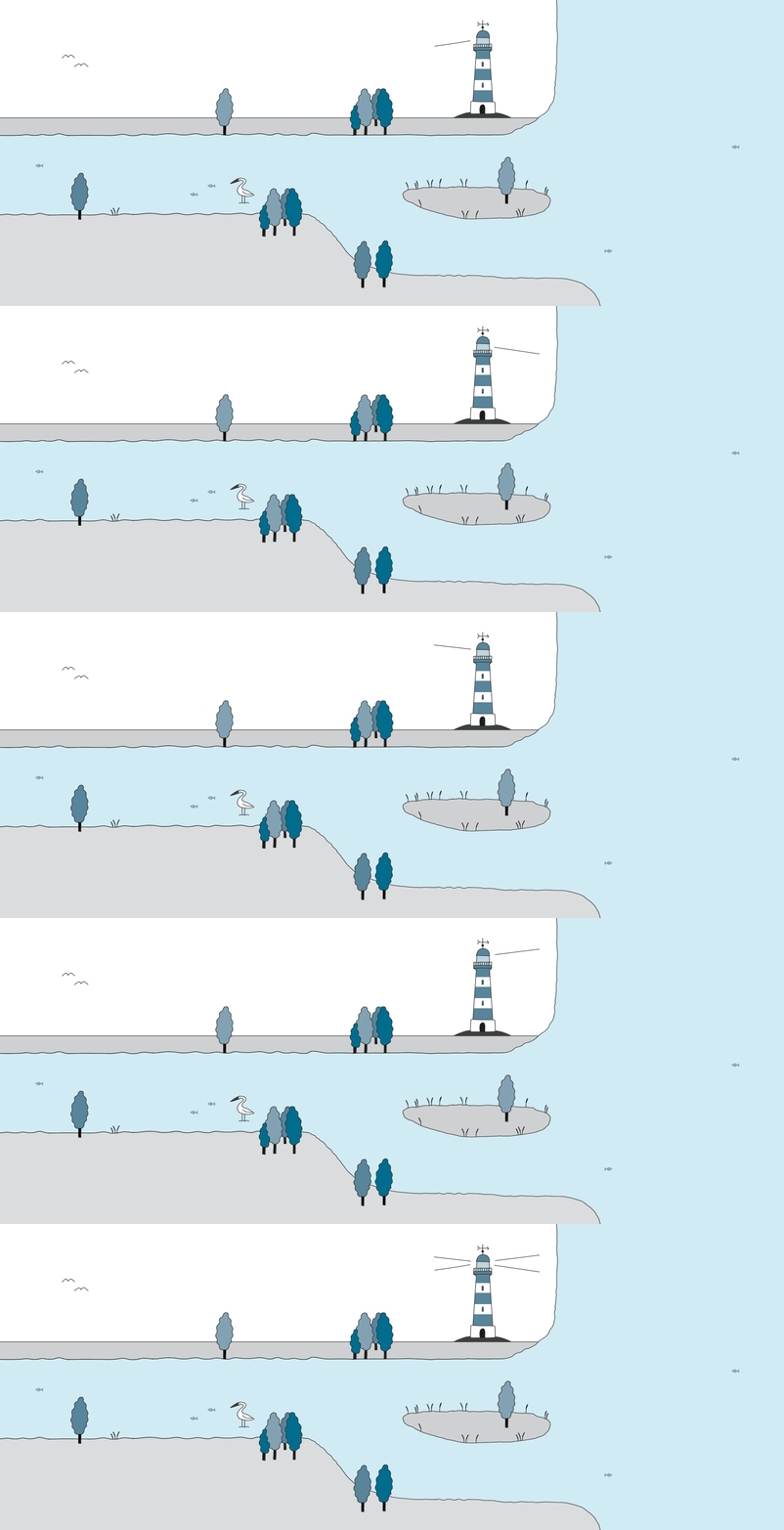
The mouth of the river
Saltwater intrusion: the conflict between upstream and downstream users.
The effects of water scarcity are most visible at the river’s mouth. Those who live, work, or visit these areas experience the consequences of how the water has been used and the policies implemented along the river’s entire course. Residents, businesses, and municipalities at the mouth may find themselves in conflict with users further upstream.
One of the most evident consequences is saltwater intrusion. When the river’s flow decreases, seawater pushes up the river, increasing the concentration of salt in both the water and the surrounding soil. Salt endangers the balance of ecosystems, damages crops, and makes groundwater undrinkable. This issue can be mitigated by constructing anti-salinity barriers at the river’s mouth and releasing more water from upstream reservoirs. The question remains: who should act first?
 Technical documentation
Policies and tools for water availability trends: The NEXOGENESIS Project









 My cookie preferences